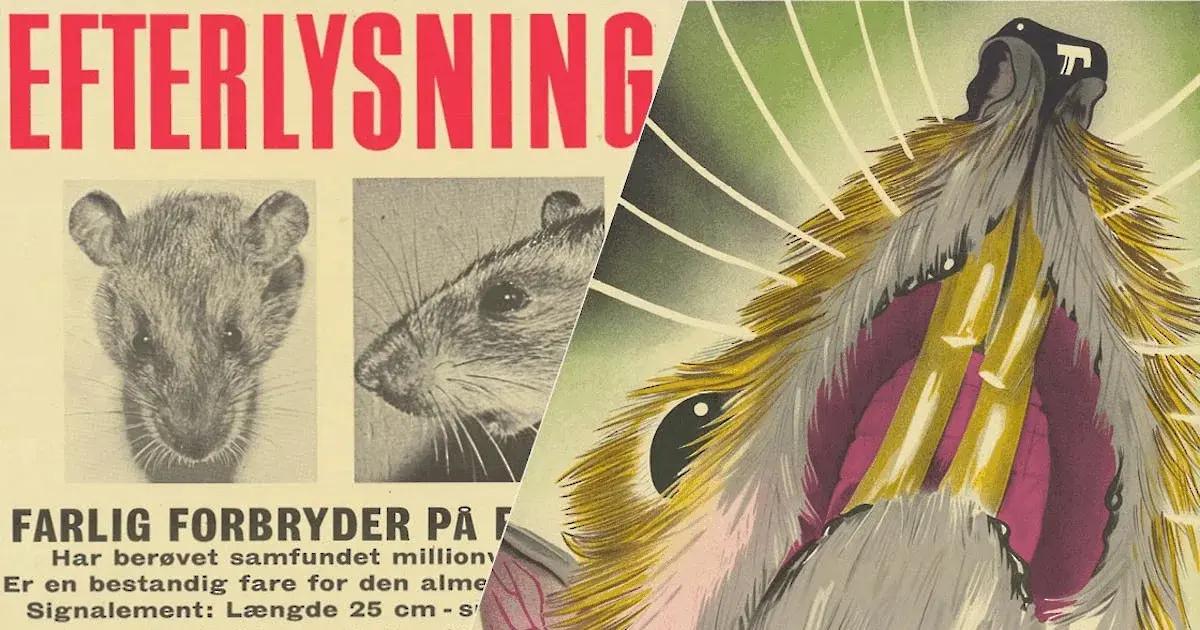
Few animals have been as feared as the rat. Only in the second half of the 1800s was it designated as a genuine public health threat and social enemy – a development driven by new scientific insights and the growth of modern cities.
Throughout the 20th century, rat control was systematized and made more efficient in parallel with the development of the welfare state. Yet the rat proved difficult to combat. The city's dense development, infrastructure, and abundance of accessible waste created ideal conditions for an animal that is nearly omnivorous, a skilled climber and swimmer, equipped with teeth so sharp it can gnaw through anything softer than glass and metal.
Museum Inspector Mikkel Høghøj from the Danish Technical Museum tells the story of how rats shaped modern Copenhagen. He explores rat control's role as welfare policy, how the city became a rat habitat, and what influence rats had on Copenhageners' ideas about health, hygiene, and nature's place in the urban landscape.